white graduation nails for nursing school

The exact polish to wear for your nursing graduation isn’t just about aesthetics; it’s a symbolic transition from rigorous clinical training to professional excellence. White graduation nails for nursing school are trending because they represent cleanliness, sterile precision, and the ‘clean girl’ aesthetic—perfect for the transition into a healthcare career. If you are wondering why everyone is switching to soft-white, sheer-milky, or pearlescent finishes for their ceremony, it’s because these shades maximize elegance while remaining compliant with most hospital uniform policies you’ll face post-graduation. At [Nailosmetic](https://nailosmetic.com/), we believe your graduation day manicure should be both sentimental and strategic. This guide reveals the best white nail art, long-lasting formulas, and professional maintenance tips to ensure your hands look flawless while you accept your degree. Ready to find your signature shade? Let’s dive into the details that make these nails the industry gold standard.
Why are white graduation nails the top choice for nursing students?
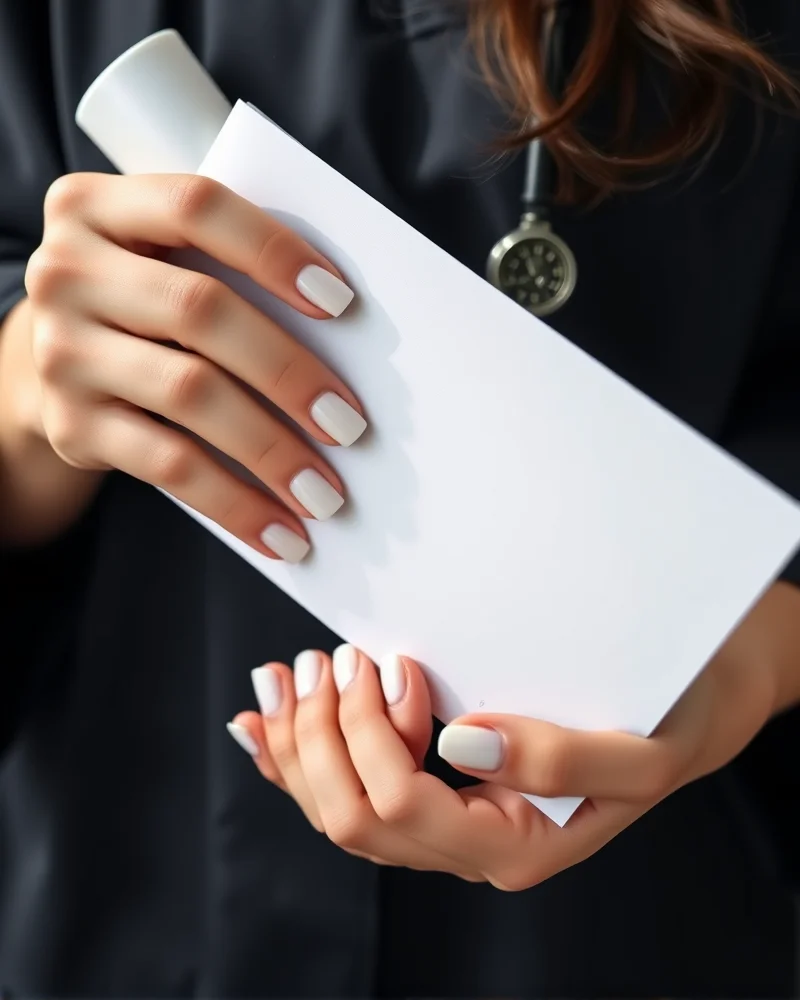
When you stand at the threshold of your nursing career, the transition from student to healthcare professional is marked by both your academic accomplishments and the visual signals you project. For nursing graduates, white nails are far more than a simple aesthetic trend. They serve as a powerful symbolic bridge between the classroom and the clinical floor. In the world of color psychology, white is intrinsically linked to notions of purity, hygiene, and clinical excellence. It is the color of the sterile environment, reflecting the meticulous attention to detail and high standards of cleanliness that define the nursing profession. By choosing a crisp, clean white manicure for your graduation, you are subtly signaling that you are prepared to uphold the rigorous requirements of a hospital setting.
The white coat ceremony is a milestone that every nursing student anticipates, and white nails serve as the perfect accessory to this iconic transition. Choosing a neutral or white palette allows your hands to look polished, intentional, and composed as you receive your diploma. This choice effectively mirrors the professionalism of your future scrubs and laboratory coats, establishing a narrative of readiness. Beyond the ceremony itself, selecting a neutral tone is a tactical decision for the immediate post graduation period. As you begin your journey of job interviews, a classic white manicure presents as a safe, universally respected option that adheres to the strictest facility dress codes.
Hiring managers and nursing recruiters often prioritize candidates who understand the importance of professional grooming and infection control standards. A neutral, well maintained manicure suggests that you are already attuned to the realities of patient care, where natural or subtle tones are preferred over loud, distracting colors. Opting for a milky white or a soft, creamy off white ensures that your hands remain understated yet sophisticated, allowing your personality and your clinical skills to take center stage. This minimalist approach demonstrates maturity and a clear grasp of hospital expectations, helping you project an image of a reliable, competent, and highly prepared nurse during those crucial initial impressions. Ultimately, a white manicure acts as a silent but effective tool to bolster your professional confidence as you enter the workforce.
What are the most popular white nail shades for graduation?
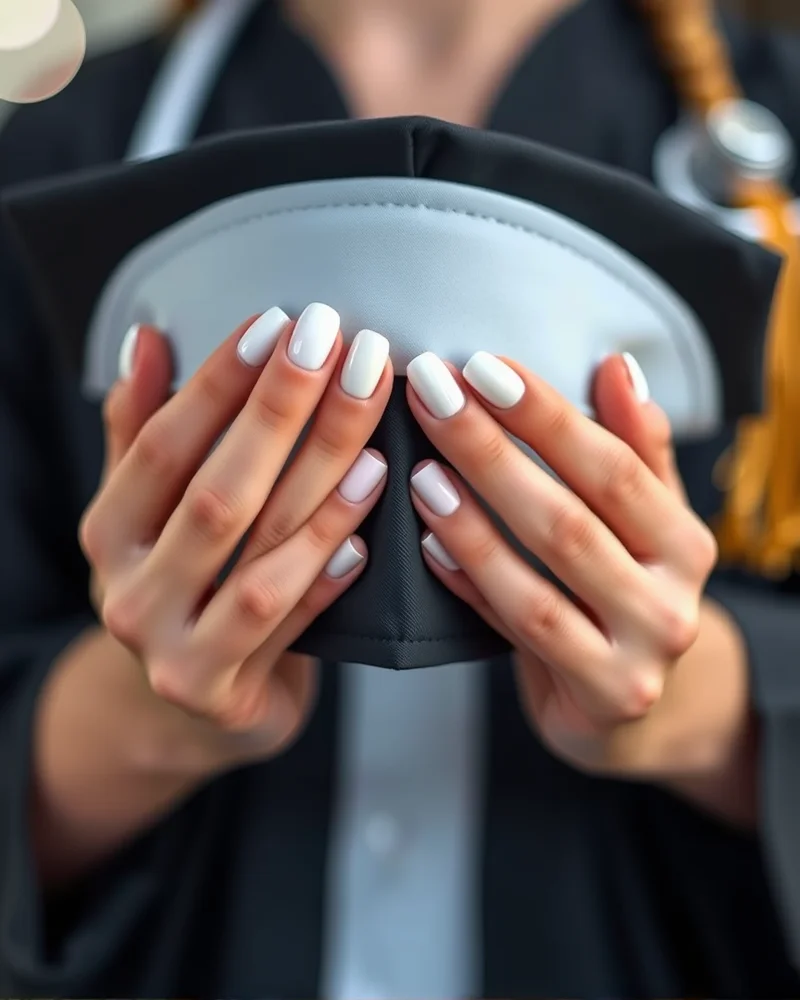
When selecting the perfect white polish for your nursing school graduation, the nuance is everything. You are aiming for a professional, clean aesthetic that transitions seamlessly from the pinning ceremony to post-graduation celebrations. The following shades represent the gold standard in the beauty industry.
The Shade Breakdown
- Milk Bath: This is the ultimate sophisticated choice. It offers a semi-translucent, soft finish that mimics the look of healthy, hydrated nail beds. It is remarkably forgiving and grows out gracefully.
- Opaque Snow: For those who love a bold, high-fashion statement, Opaque Snow provides full coverage. It is stark, crisp, and incredibly clean, making it a favorite for photography.
- Sheer Pearl: Infused with a subtle shimmer or microscopic iridescence, this shade adds a touch of glamour without feeling over the top. It catches the light during outdoor graduation ceremonies beautifully.
- Creamy Ivory: This shade features subtle yellow or beige undertones. It feels organic and soft, avoiding the harshness of a true paper white.
Choosing Your Formula: Gel Versus Regular Polish
| Feature | Gel Polish | Regular Polish |
|---|---|---|
| Longevity | Up to three weeks | Five to seven days |
| Dry Time | Instant under UV/LED light | Thirty to sixty minutes |
| Removal | Requires soaking with acetone | Simple wipe with remover |
| Best For | High-activity clinical shifts | Frequent color changes |
Finding Your Perfect Undertone
Selecting white polish is not one size fits all. If you have cool undertones in your skin, opt for bright, crisp whites like Opaque Snow or cool-toned Milk Bath variants. These shades complement the pink or blue undertones in your skin. Conversely, if your skin boasts warm, golden, or olive undertones, gravitate toward Creamy Ivory or warm-toned pearlescent shades. These prevent your hands from appearing washed out. If you are uncertain about your skin tone, look at the veins in your wrist. Blue or purple veins suggest cool tones, while green veins typically indicate warm tones. Regardless of the shade you choose, ensure you use a high-quality top coat to maintain a professional, high-gloss finish throughout your graduation week.
How can you achieve a salon-quality white manicure at home?
Achieving a crisp, streak-free white manicure is often considered the ultimate test of a home manicurist. Because white polish is heavily pigmented with titanium dioxide, it is prone to clumping and visible brush marks if not handled with precision. To ensure your graduation nails look pristine, follow this professional, step-by-step methodology designed to mimic a high-end salon finish.
- Precision Cuticle Care: Never skip the prep. Start by pushing back your cuticles with a stainless steel cuticle pusher after applying a cuticle remover gel. Use nippers to trim only loose, dead skin. A clean nail plate is essential because any residual skin or oil will cause the polish to lift or streak.
- Surface Smoothing: Buff the surface of your natural nails lightly with a high-grit buffer block. This removes ridges and ensures the base coat adheres perfectly. If you have deep ridges, consider applying a ridge-filling base coat, as it creates a smooth, opaque foundation that helps white polish glide on without catching.
- The Importance of the Base Coat: Always apply a high-quality base coat. This prevents the white polish from staining your natural nail and provides a tacky surface for the color to grab onto. Allow this to dry completely before applying your first coat of white.
- Mastering the 3-Stroke Technique: This is the secret to a professional look. Place a bead of polish in the center of your nail just above the cuticle. Push the polish gently toward the cuticle without touching it, then drag the brush straight down the center to the free edge. Reload your brush slightly and repeat this on the left side and then the right side.
- Layering for Opacity: If you want to elevate your look with complex patterns, you can learn more about intricate techniques in our nail art designs ultimate guide to add professional flair to your white base. Always use thin layers rather than one thick coat. Two or three thin coats will self-level and prevent the streaky appearance common with thicker applications.
- Finishing Touches: Always cap the free edge of your nail with polish to prevent tip wear. Finish with a high-gloss, quick-dry top coat. This seals the layers, blurs any minor brush strokes, and gives your manicure a mirror-like shine that lasts through your graduation festivities.
What are the best white nail art designs for graduation day?

When you are walking across that graduation stage to receive your nursing degree, your hands will be in the spotlight. Whether you are shaking hands with faculty or holding your diploma, your manicure serves as an extension of your professional identity. For a momentous day like this, less is almost always more. A clean, sophisticated look ensures your nails remain timeless in photos while honoring the clinical precision expected in the healthcare field.
- Classic French Tips with a Milky White Base: The traditional French manicure is a staple, but for a nursing graduation, opt for a sheer, milky white base instead of a clear one. This creates a soft, ethereal appearance that looks polished against scrubs or a graduation gown. Pair this with a crisp white tip to maintain that iconic nursing aesthetic. It is subtle, elegant, and perfectly understated.
- Minimalist Dot Art and Geometric Lines: If you want to add a touch of personality without overwhelming the design, try a single minimalist dot near the cuticle of your ring finger. Using a metallic gold or silver dot against a stark white background adds a modern, sophisticated edge. Alternatively, a single thin white vertical line down the center of the nail can elongate your fingers and provide a sleek, architectural look.
- Subtle Floral Accents: Small, hand-painted white floral motifs are a beautiful way to celebrate your achievement. Focus on tiny petals or a single stem on an accent nail. Floral designs symbolize growth and new beginnings, which perfectly mirrors the transition from nursing student to registered nurse.
- Nursing-Inspired Symbols: To pay homage to your dedication, consider incorporating subtle iconography. A thin heartbeat line or a delicate, minimalist stethoscope outline on one nail is a chic way to signify your career path. The key is scale. Keep these symbols incredibly small and positioned toward the side or base of the nail to maintain a professional, high-end finish.
Choosing a minimalist aesthetic for your graduation day is a strategic choice. Since you will likely be entering a fast-paced clinical environment shortly after, a neutral, well-maintained white manicure signals that you value cleanliness and attention to detail. These designs are versatile enough to transition from the ceremony to your first day on the hospital floor, making them the ultimate investment in your new professional chapter.
How long should your nails be for the nursing profession?

When preparing for your nursing graduation, it is easy to get swept up in the glamour of long, ornate acrylics or stiletto shapes. However, as you transition from the classroom to the clinical floor, your relationship with nail length must undergo a significant shift. The nursing profession maintains a strict standard regarding personal grooming, primarily focused on infection control and patient safety. In almost every hospital policy handbook, the golden rule for nail length is clear: nails must be kept short, typically not extending beyond the tips of your fingers.
The reasoning behind this limitation is grounded in microbiology and risk mitigation. Research consistently shows that longer nails, especially those exceeding a quarter of an inch, harbor significantly higher amounts of bacteria and yeast compared to short, trimmed nails. Even with rigorous hand washing protocols and the use of alcohol based hand sanitizers, the subungual area under a long nail serves as a protected reservoir for pathogens. This poses an unacceptable risk to immunocompromised patients during procedures or routine assessments. Furthermore, the integrity of your personal protective equipment is at stake. Long or sharp nails are notorious for causing micro-tears and punctures in medical grade nitrile gloves. When a glove is compromised, your risk of exposure to bloodborne pathogens or bodily fluids increases exponentially, placing your health and your license in jeopardy.
Graduation is the ideal time to pivot toward a functional yet stylish aesthetic. Opting for a short, rounded or squoval shape for your white graduation manicure serves two purposes. First, it aligns with professional standards you will soon be required to follow in any healthcare facility. Second, it proves that short nails can be just as sophisticated as their longer counterparts. A crisp white polish on a short, well groomed nail bed looks clean, clinical, and high fashion. By embracing this length now, you are building the professional habits that will define your career. You do not have to sacrifice style for functionality. Use this milestone to refine your look, choosing high quality opaque white lacquers or gel finishes that highlight your attention to detail and readiness for the high stakes environment of nursing.
How do you maintain white nails during a busy graduation week?
Graduation week is a whirlwind of ceremonies, pinning rituals, and celebrations, which leaves very little room for nail maintenance. Because white polish is notoriously unforgiving, keeping your manicure pristine requires a strategic approach to preservation. To ensure your nails remain crisp and bright from your first graduation brunch until the final cap toss, consider the following expert maintenance tips.
- Prioritize UV-blocking top coats: The primary culprit behind premature yellowing is exposure to sunlight and artificial tanning beds. Even if you are indoors, environmental pollutants can compromise your white lacquer. Always select a high-quality top coat formulated with UV inhibitors. This acts as a protective shield, preventing discoloration and preserving the brilliant, milky aesthetic of your white nails.
- Navigate color interactions: White polish is a magnet for pigments. During graduation week, exercise caution when handling dark clothing, leather goods, or even colored stationery, as these can leave dye transfers on your light manicure. Avoid contact with hair dyes, self-tanners, and even dark-pigmented spices like turmeric, which can stain the finish instantly. If you find yourself craving a change in aesthetic later in the season, you might experiment with sophisticated fall cat eye nail designs for a durable alternative that hides wear much better than pure white.
- Adopt a daily maintenance ritual: Carry a small bottle of high-gloss top coat in your bag for daily touch-ups. Applying a thin layer every forty-eight hours reinforces the seal at the free edge of your nail, which is where chips most frequently begin. Should you encounter a minor chip, gently buff the area and apply a tiny drop of polish to fill the void before sealing it with a fresh coat of clear gloss.
- Implement emergency repair strategies: If a significant chip occurs, do not panic. Use a fine-grit nail file to smooth the jagged edge. If you cannot reach a salon, use a white nail art pen or a highly opaque white polish to fill in the gap. Once the area is dry, apply two layers of top coat to bridge the texture gap. By staying proactive, you can maintain your professional white graduation look throughout your busiest week.
Are white gel nails better than traditional polish for graduation?
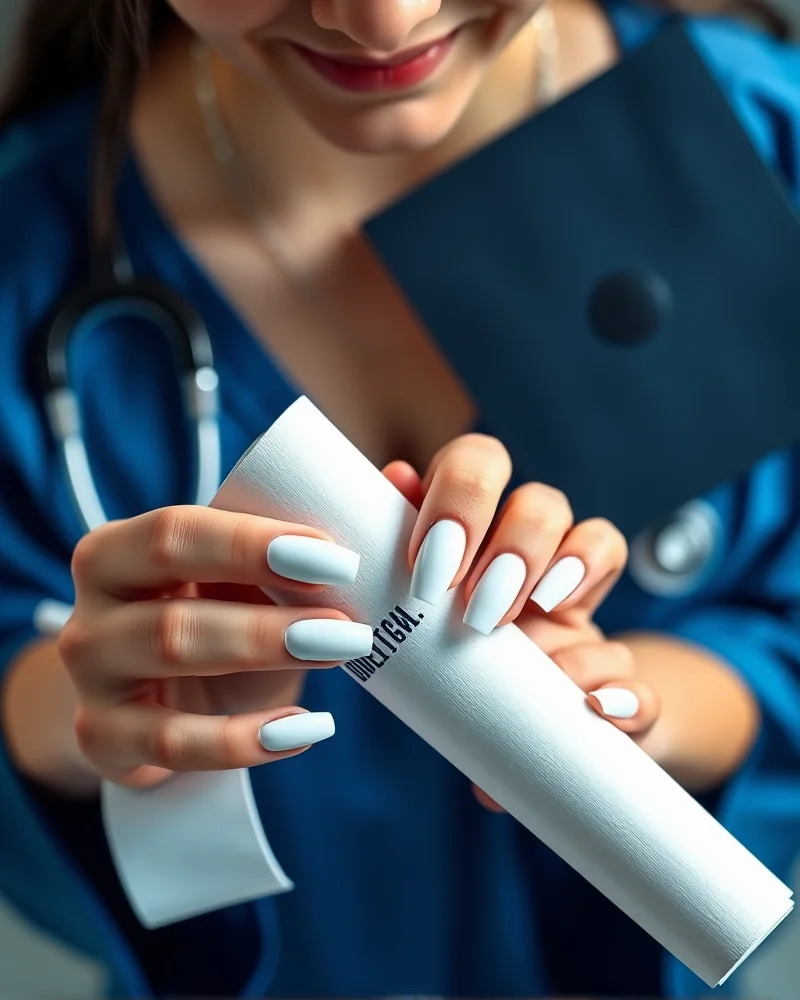
When you are preparing for your nursing school graduation, the last thing you want to worry about is a chipped manicure ruining your photos. Between the pinning ceremony, the formal graduation walk, and the post-ceremony celebrations, your hands will be in constant motion. Choosing between traditional nail lacquer and gel polish is a pivotal decision for any graduate. Traditional polish is convenient for home application, but it is notorious for smudging and chipping within hours of application. In contrast, gel polish offers a salon-quality finish that remains pristine for up to two weeks, making it the superior choice for a high-stakes event.
The secret behind the longevity of gel manicures lies in the curing process. Unlike standard polish that dries through air evaporation, gel polish contains photo-initiators that react to ultraviolet light. When you place your fingers under an LED or UV lamp, the liquid gel undergoes a chemical transformation known as polymerization. This process turns the liquid into a hard, durable, plastic-like coating that is resistant to scratches and daily wear. Because the nails are cured instantly, you avoid the frustrating waiting period associated with traditional polish where one stray bump could ruin your entire look.
Beyond durability, the finish quality of gel is unmatched. White gel polish provides a dense, opaque, and high-gloss appearance that looks expensive and professional. It creates a flawless, porcelain-like surface that complements the crisp white color often associated with nursing school milestones. If you are prone to biting your nails or working with your hands, the added thickness of a gel overlay provides a protective barrier that prevents breakage. While gel manicures do require a professional soak-off process using acetone to prevent damage to the natural nail plate, the trade-off for a worry-free graduation week is well worth the investment. For the busiest days of your life, skip the air-dry lacquer and opt for the reliable, chip-resistant shine that only a professionally cured gel manicure can provide.
What are the most common mistakes to avoid with white polish?
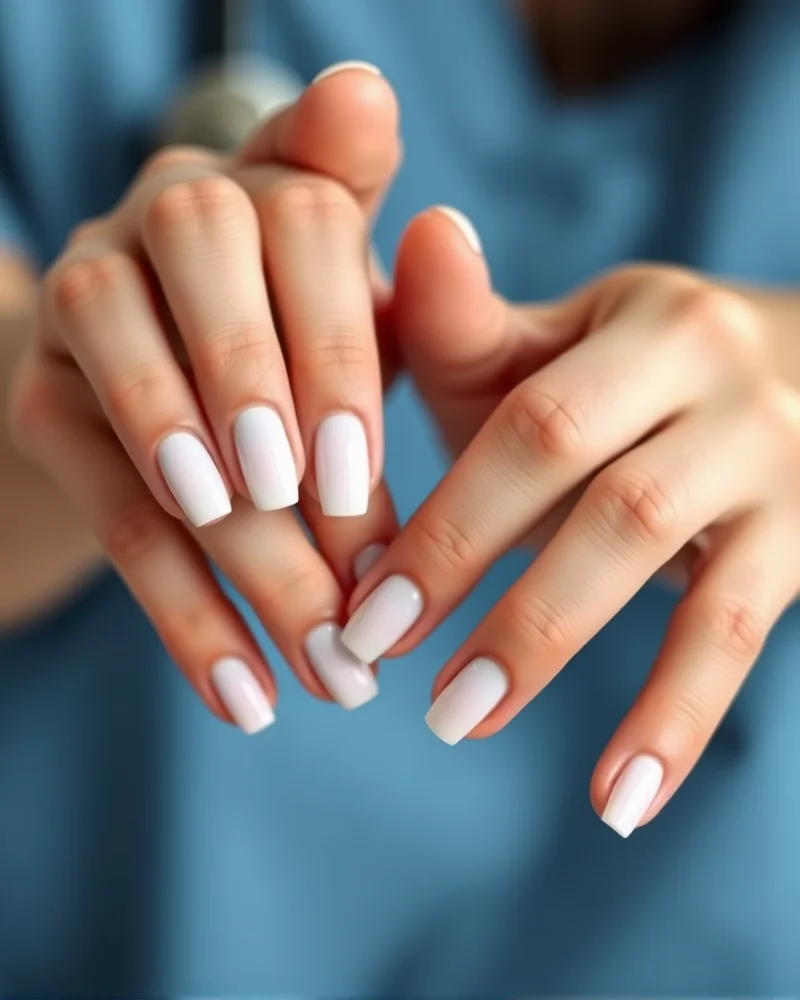
Achieving that crisp, clinical white aesthetic for your nursing graduation requires more than just a steady hand. White polish is notoriously unforgiving, acting as a magnifying glass for any imperfections in your application technique. Whether you are opting for a long-wearing gel manicure or traditional lacquer, mastering the process is essential to avoid the dreaded ‘chalky’ look. Here are the most common pitfalls and how to troubleshoot them for a flawless finish.
- Combating Visible Streaks: The most frequent complaint with white nail polish is uneven pigment distribution. This usually happens because you are trying to achieve full opacity in one thick coat. Instead, apply three thin, even layers. Allow each layer to dry or cure completely before applying the next. If streaks persist, try a ridge-filling base coat to create a smooth, leveled canvas that prevents the polish from settling into nail grooves.
- Preventing ‘Tippiness’: This refers to the polish wearing away prematurely at the free edge of the nail, which is particularly noticeable on stark white manicures. To prevent this, ensure you ‘cap the free edge’ by running your brush horizontally across the very tip of your nail during every coat. This seals the edge and adds a protective barrier against the friction encountered during clinical rotations or busy graduation preparations.
- Eliminating Bubbles: Bubbles often occur when the polish bottle is shaken vigorously before use. This action traps air in the formula. Instead of shaking, gently roll the bottle between your palms to mix the pigments. Additionally, avoid applying polish in direct sunlight or in front of a fan, as rapid drying can trap air pockets beneath the surface of the polish.
- Troubleshooting Improper Curing: If you are using gel polish, an uneven or ‘tacky’ finish usually points to improper curing. Ensure your LED or UV lamp is high quality and that your hand is placed perfectly flat inside the unit. If the white looks translucent or blotchy, your lamp wattage might be too low, or the gel may be applied too thickly for the light to penetrate the pigment properly. Always follow the manufacturer’s recommended cure times for opaque colors.
- Solving the ‘Chalky’ Appearance: If your white manicure looks more like correction fluid than a sophisticated nail look, it likely lacks the right finish. A high-shine top coat is non-negotiable for white polish. It provides depth and mimics a salon-grade finish, transforming a flat, matte, or chalky white into a bright, luminous, and professional-looking manicure that perfectly complements your nursing school graduation attire.
How to choose the right white polish based on your skin tone?
Choosing the perfect shade of white for your graduation manicure is a precise science that hinges on understanding your natural skin undertones. The wrong shade can inadvertently make your skin appear sallow, jaundiced, or unnaturally pale, while the right shade acts as an instant brightener that complements your nursing school achievement. To master this look, you must identify whether your veins lean toward blue (cool), green (warm), or a blend of both (neutral).
The secret lies in the color temperature of your polish. Crisp, stark whites possess blue or gray undertones, making them the ideal candidate for those with cool skin tones. Conversely, if your skin radiates golden or olive hues, a stark white may clash, making your hands look dull. In those cases, you should reach for creamy, off-white, or ivory shades that contain yellow or warm beige undertones. If you find yourself struggling to transition your nail aesthetic from a bright spring graduation into the deeper, moodier trends of the year, you might eventually want to explore options like gorgeous burgundy and red nails for the upcoming season.
Use the following guide to ensure your manicure elevates your complexion rather than detracting from it.
| Skin Undertone | Best White Polish Type | Why It Works |
|---|---|---|
| Cool Undertones | Stark, Bright, or Blue Based White | The cool pigment mirrors your skin tone, creating a clean, high contrast look that prevents fingers from looking yellow. |
| Warm Undertones | Creamy, Ivory, or Milky White | The subtle yellow or peach pigments within the polish harmonize with your natural glow for a seamless, elegant finish. |
| Neutral Undertones | Soft White or Sheer Pearl | Neutral skin handles most shades, but a balanced soft white provides a sophisticated, versatile appearance that avoids being too harsh. |
Pro tip: If you are unsure of your undertone, test the polish on a swatch near your cuticle before applying it fully. If the white makes your skin look pink or blue, keep searching. A perfectly matched white should look cohesive with your hands, providing a crisp, polished appearance that feels professional enough for your nursing ceremony and beyond.
What are the best nail care routines for future nurses?
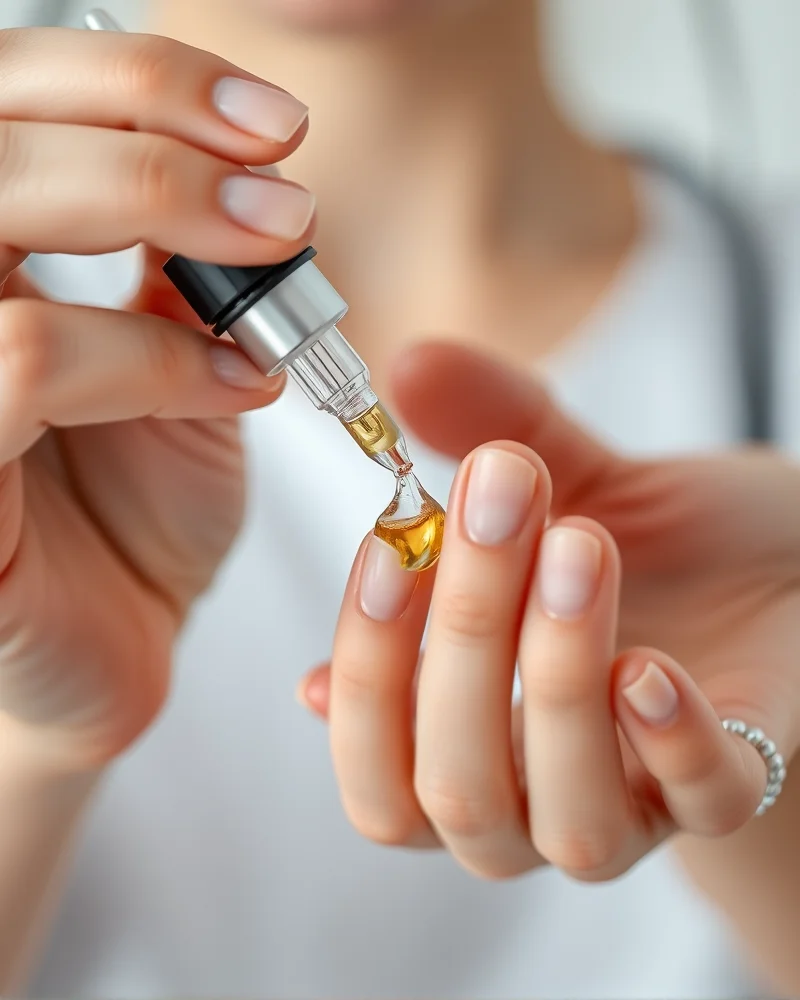
Embarking on a career in nursing is a demanding physical endeavor that places your hands under constant stress. Between back to back patient care shifts, frequent friction, and the relentless use of harsh alcohol based hand sanitizers, your nails are prone to becoming brittle, thin, or prone to splitting. As a nursing student, maintaining a professional aesthetic while prioritizing long term nail integrity is essential. The secret to keeping your nails in pristine condition despite the rigors of clinical rotations lies in a dedicated, consistent care routine that emphasizes deep hydration and structural reinforcement.
The foundation of any successful nail care regimen for a medical professional is consistent moisture. Frequent hand washing strips the natural oils from your nail plate, leading to dry and cracked cuticles. To counteract this, you should make cuticle oil a non negotiable part of your daily routine. Look for high quality oils containing jojoba or vitamin E, as these ingredients are small enough to penetrate the nail matrix and provide deep hydration. Applying this oil at least twice a day, especially before bed, acts as a protective barrier against the drying effects of hospital grade soap.
Strengthening is equally vital for those who want to keep their nails looking white and healthy. Because nursing duties often involve using your fingertips for tasks like opening supplies or typing, you need a resilient base. Utilizing a professional grade nail strengthener helps to cross link the proteins in your nails, providing a durable shield that prevents mechanical damage. Additionally, opting for a high quality top coat can seal in your manicure and provide an extra layer of protection against minor impacts.
Finally, consider the environmental impact of your clinical work. Always keep a fragrance free, thick hand cream in your scrub pocket. Moisturizing immediately after every hand sanitizing session will prevent the skin around your nails from becoming inflamed. By treating your nail care as a daily maintenance habit rather than an occasional luxury, you ensure your hands remain healthy, professional, and ready for your future nursing career.
Frequently Asked Questions about graduation nails
- Can I wear acrylics to graduation as a nursing student?
Many nursing students wonder if they should retire their acrylics before the big day. While you will eventually need to transition to a more practical aesthetic for your upcoming clinical rotations and hospital shifts, graduation is your moment to celebrate. Yes, you can absolutely wear acrylics to your commencement ceremony. Many nurses choose to get a fresh set for this special milestone. However, keep in mind that most nursing programs and clinical sites enforce strict policies regarding artificial nails due to infection control protocols. If you opt for acrylics for your graduation photos and the ceremony, ensure you have a plan to remove them shortly after. Consider a short, rounded, or squoval shape to maintain a professional profile while still enjoying the durability and polished look that acrylic extensions provide.
- How do I remove white polish without staining my natural nails?
White nail polish is notorious for leaving behind a yellow or cloudy residue, especially if it is highly pigmented. To avoid staining your nail plate, start by applying a high quality, clear base coat before your white lacquer. This creates a protective barrier between your nail and the pigment. When it is time to remove the polish, do not scrub aggressively. Instead, soak a cotton pad in an acetone based remover, place it firmly on your nail, and hold it there for thirty seconds before wiping it away. If you notice slight discoloration, a gentle buffing block can brighten the surface. You can also use a mixture of baking soda and lemon juice to lift any lingering yellow tones from the nail bed without damaging the cuticle area.
- Is white polish formal enough for a nursing school graduation ceremony?
White polish is arguably the most elegant and timeless choice for graduation. It exudes a clean, crisp, and sophisticated energy that perfectly complements the traditional nursing uniform or a white graduation cap and gown. In the context of nursing, white is symbolic of the profession itself. Whether you choose a sheer milky white, a creamy opaque finish, or a subtle pearlized shimmer, white nails are considered highly appropriate and professional. They provide a refined aesthetic that looks pristine in portrait photography and transitions seamlessly from the graduation stage to post ceremony celebrations with family and friends.
Your graduation marks the end of a grueling chapter and the beginning of a life-changing career in nursing. By choosing a crisp, clean white manicure, you are signaling both your respect for the profession and your readiness for the clinical floor. Whether you choose a classic milky white or a sophisticated pearlescent shimmer, ensure your nails are treated with the same care you will soon provide your patients. Keep your style simple, your length functional, and your finish flawless. For more professional nail care tips and inspiration, explore the archives at Nailosmetic and step into your graduation day with confidence.